A URL shortener is a web-based service that converts a long website address into a much shorter link. Instead of sharing a lengthy URL filled with parameters, numbers, or tracking information, you can use a compact link that redirects visitors to the same destination.
Short URLs are widely used in social media posts, text messages, digital marketing campaigns, advertisements, printed materials, and content sharing. Many modern URL shortening platforms also provide click analytics, custom links, branded domains, and campaign management features.
What Is a URL Shortener?
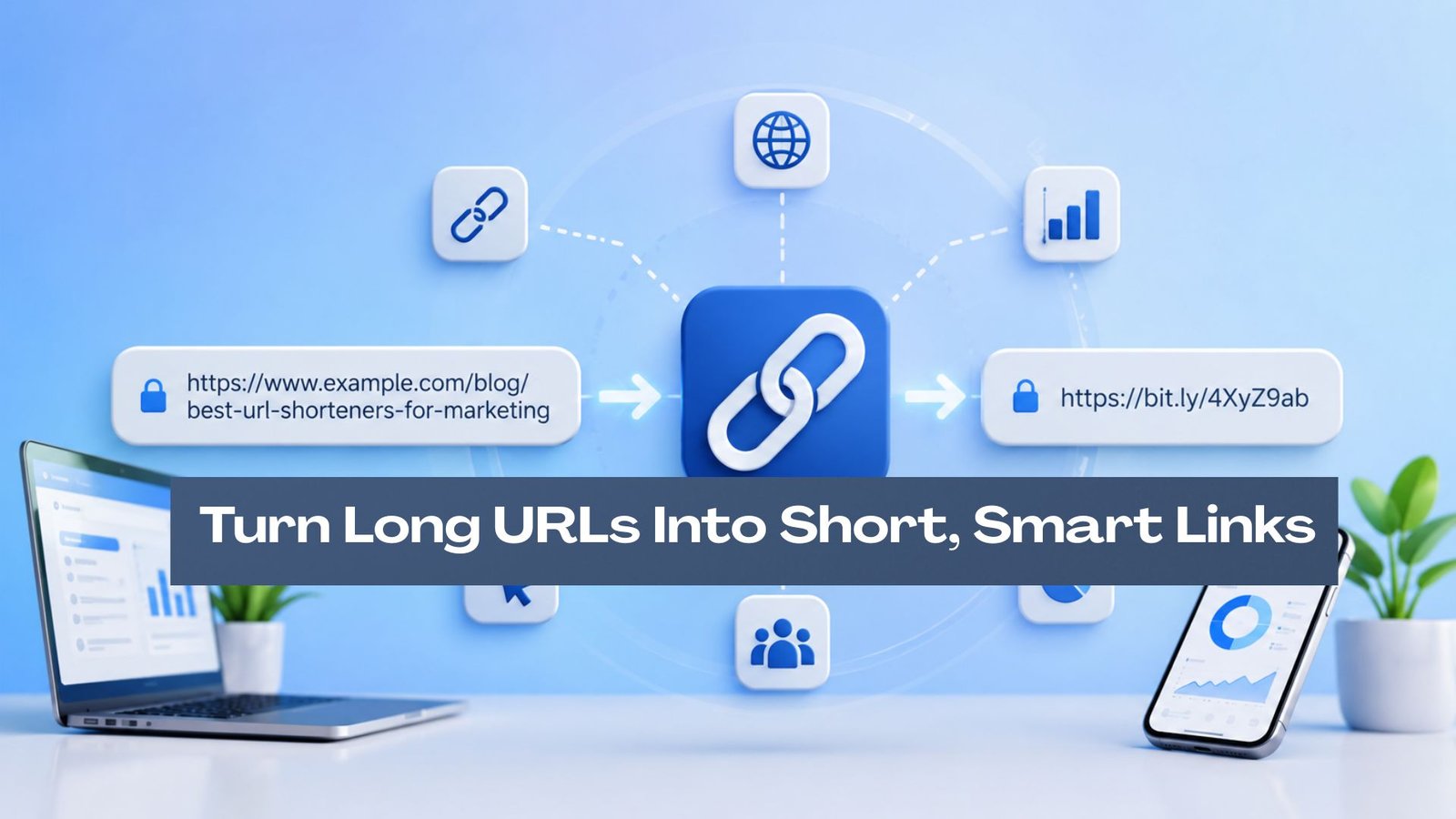
A URL shortener takes an existing long web address and creates a shorter version that points to the same page.
For example, a long address such as:
https://example.com/products/category/item?id=12345&utm_source=social
could be converted into something similar to:
https://short.example/Ab12X
When someone opens the shortened address, the service identifies the unique code and redirects the visitor to the original URL.
The destination page does not change. The short link simply acts as an intermediary between the user and the original website.
How Does a URL Shortener Work?
The process is relatively simple, even though the technology behind large-scale URL shortening services can be sophisticated.
1. A Long URL Is Submitted
The user enters or pastes the complete website address into a URL shortening service.
2. A Unique Short Code Is Created
The service generates a unique identifier, often made up of letters and numbers. This code is associated with the original URL.
3. The Mapping Is Stored
The shortening platform stores the relationship between the short code and the destination URL in its database or another storage system.
4. Someone Opens the Short Link
When a visitor clicks the shortened URL, the service receives the request and identifies the corresponding short code.
5. The Visitor Is Redirected
The service finds the stored destination and sends the visitor to the original website through an HTTP redirect.
This entire process generally happens very quickly, so users normally notice little or no delay.
Simple Example of URL Shortening
Imagine you want to share a long article URL with someone through SMS.
Instead of sending:
https://example.com/news/technology/2026/latest-smartphone-launch?utm_campaign=summer&utm_source=facebook
you could share:
https://short.example/X7kP2
The second address is easier to read, copy, remember, and share while still taking the visitor to the same article.
Why Do People Use Short URLs?
URL shorteners are useful for both individuals and organizations because they solve several practical problems.
Save Space
Long URLs can consume valuable characters in SMS messages, social media posts, advertisements, and other limited spaces.
A short link leaves more room for the actual message.
Make Links Easier to Share
A compact URL is easier to copy, paste, type, and communicate verbally.
This can be especially useful when sharing a link in printed advertisements, presentations, posters, or business cards.
Track Link Performance
Many URL shortening services provide analytics. Depending on the platform and plan, users may be able to see information such as:
- Number of clicks
- Click dates and times
- Approximate geographic information
- Device types
- Referral sources
- Campaign performance
This can help marketers understand how audiences interact with shared links.
Improve Link Appearance
A long URL containing tracking parameters can look complicated. A shorter link creates a cleaner appearance and can make shared content easier to scan.
Use Branded Links
Some services allow organizations to connect their own custom domain to short URLs.
For example, a business could use a branded address such as:
brand.example/sale
instead of a generic shortening domain.
Branded links can make URLs easier to recognize and associate with a particular organization.
Main Benefits of URL Shorteners
| Benefit | How It Helps |
|---|---|
| Shorter links | Makes long web addresses easier to share |
| Space saving | Useful for SMS and character-limited platforms |
| Click analytics | Helps measure link engagement |
| Custom branding | Allows recognizable branded URLs |
| Easier printing | Reduces the chance of URLs breaking across lines |
| Campaign tracking | Helps marketers measure promotional campaigns |
| Simple sharing | Makes links easier to type and communicate |
Who Uses URL Shorteners?
URL shortening is not limited to one type of user. Different groups use these services for different purposes.
Marketers and Advertisers
Marketing teams use short links to measure traffic from advertisements, social media campaigns, newsletters, and promotional material.
Analytics can help determine which campaigns are generating clicks.
Content Creators
Bloggers, YouTubers, social media creators, and publishers may use short URLs when directing followers to articles, products, videos, or other online resources.
Businesses
Companies can use branded short links for campaigns, product pages, events, customer resources, and internal sharing.
Everyday Internet Users
Regular users may simply shorten a long article, shopping page, or website address before sending it to friends or posting it online.
Popular URL Shortener Services
Several URL shortening platforms are available, with different features aimed at individuals, marketers, creators, and businesses.
Popular URL Shortener Services
1. Rebrandly
Rebrandly is a URL shortening and link management platform that helps businesses, marketers, and creators create customized short links. It supports branded domains and provides tools for monitoring link performance.
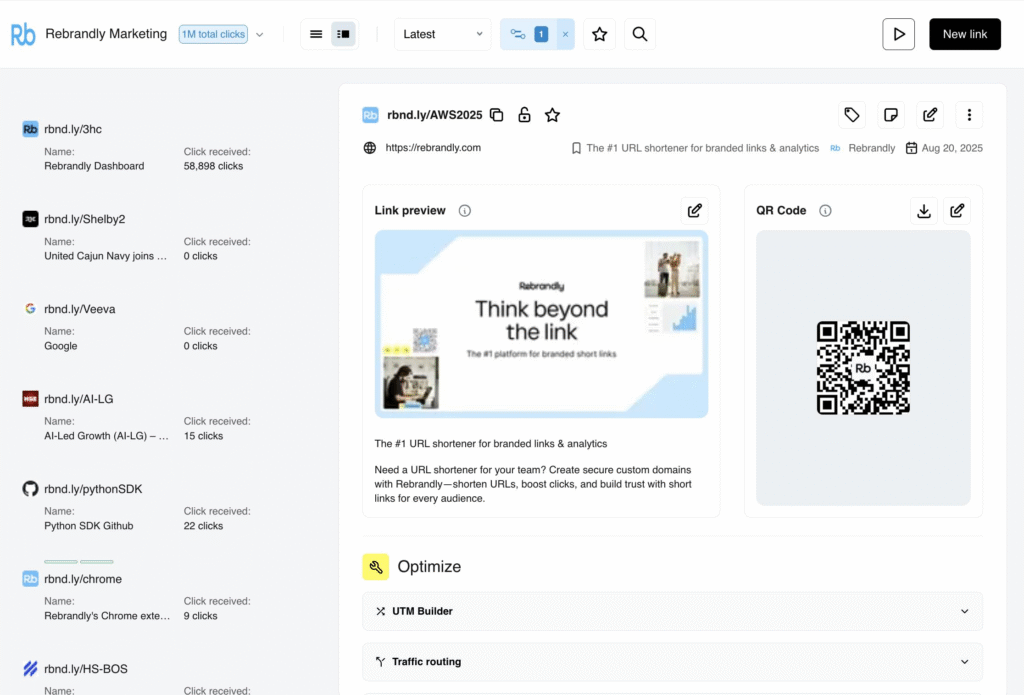
Rebrandly is useful for creating professional, branded URLs that are easy to recognize and share.
Good for: Businesses, marketers, and branded campaigns.
2. Bitly
Bitly is one of the most recognized URL shortening platforms. It allows users to create short links and provides link management and analytics features for tracking audience engagement.
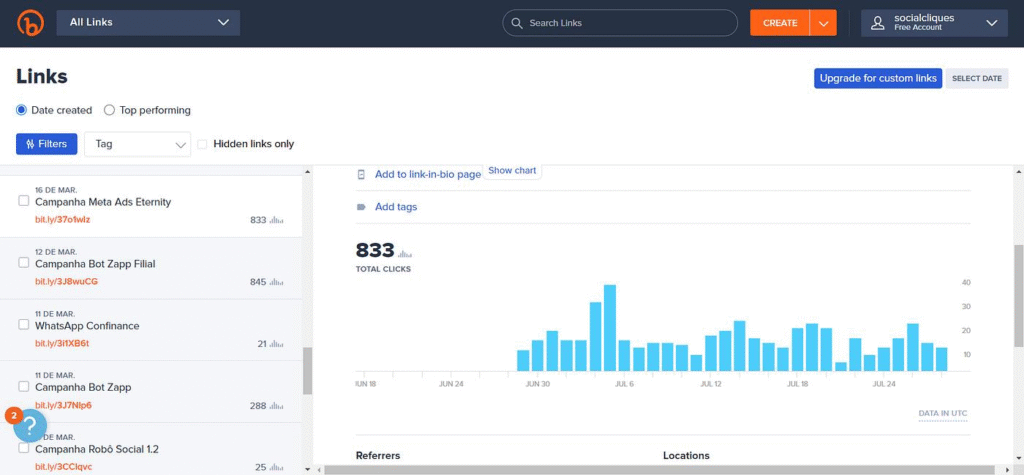
Bitly is a practical choice when you need short links with reliable tracking and management features.
Good for: Businesses, marketing teams, and large campaigns.
3. Dub
Dub is a modern link management platform that combines URL shortening with analytics and campaign management tools. It gives users more control over how their links are created and tracked.
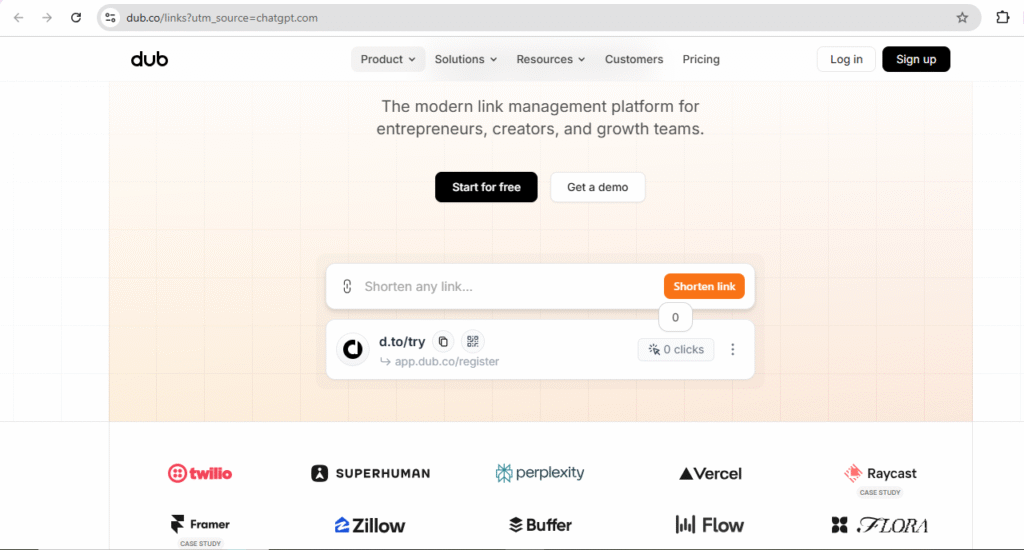
Dub is suitable for users who want modern link management along with detailed performance tracking.
Good for: Developers, creators, startups, and marketers.
4. TinyURL
TinyURL is a straightforward URL shortening service that turns long web addresses into shorter links. Its simple interface makes it convenient for quickly creating a shareable URL.
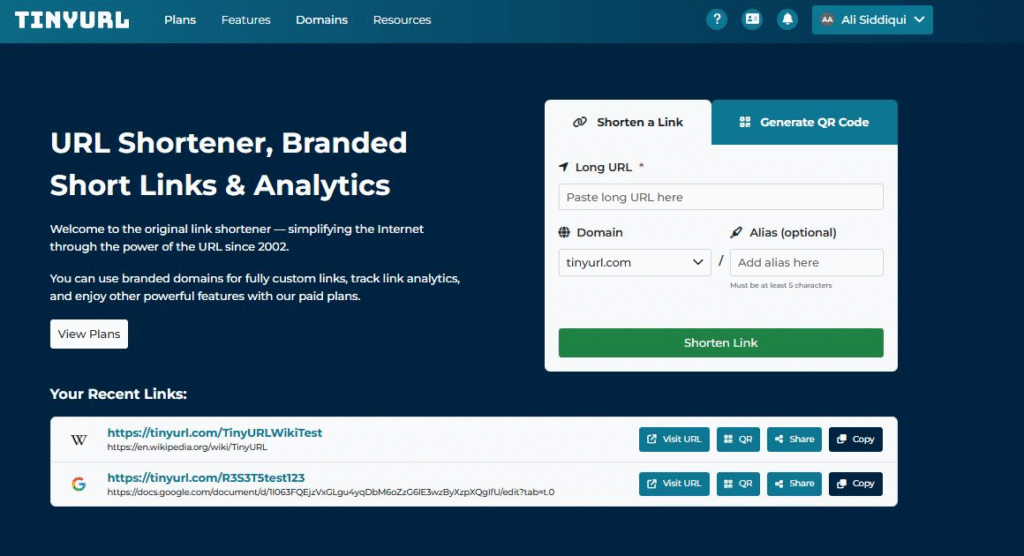
TinyURL is a good option when you want to shorten a link quickly without complicated setup.
Good for: Everyday users and quick link sharing.
5. Replug
Replug is a marketing-focused link management platform that offers short links, analytics, and campaign-related features. It helps marketers manage links and measure audience interactions.
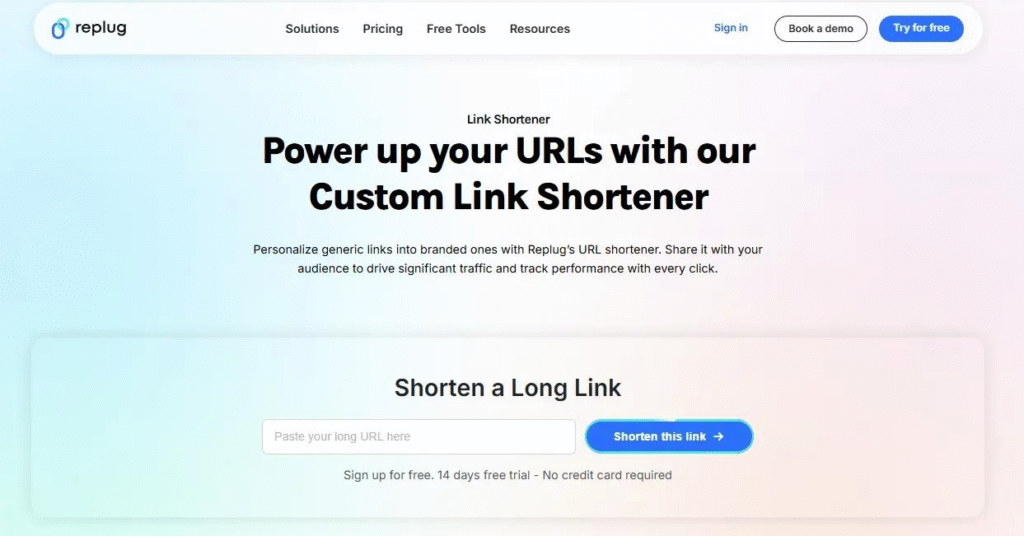
Replug can help turn simple shortened URLs into trackable links for marketing campaigns.
Good for: Marketers, advertisers, and content creators.
6. URL Shortener by Zapier
URL Shortener by Zapier is designed for creating short links as part of automated workflows. This can reduce manual work when links need to be generated repeatedly.
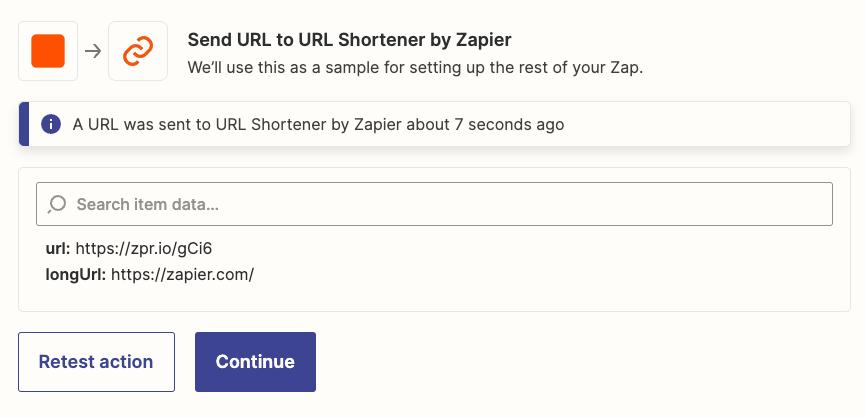
It is useful when you want URL shortening to happen automatically alongside other online tasks.
Good for: Automation users, businesses, and workflow-based tasks.
7. Short.io
Short.io is a URL shortening and link management platform that supports branded short links, custom domains, and analytics. It is designed for organizations and marketers that manage multiple URLs.
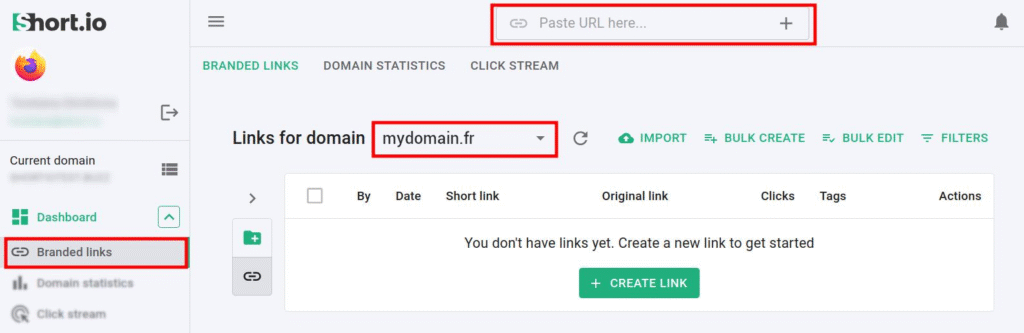
Short.io is a strong option for creating custom branded links while keeping track of their performance.
Good for: Businesses, agencies, and marketing teams.
URL Shorteners for Marketing
Short links can be particularly useful in digital marketing.
A marketer may create different links for different channels, such as:
- Facebook campaign
- Instagram campaign
- Email newsletter
- Printed advertisement
- Website banner
If analytics are supported, the resulting data can help compare traffic from these sources.
For example, a company promoting the same product on social media and email could use separate shortened URLs to determine which channel generates more clicks.
Are URL Shorteners Safe?
A shortened URL is not automatically safe simply because it is short.
One major issue is that the destination is hidden behind the short address. A visitor may not know where the link will lead until it is opened.
This means short URLs can sometimes be abused for:
- Phishing pages
- Malware distribution
- Spam
- Fraudulent websites
- Other malicious destinations
Users should therefore be careful when opening shortened links received from unknown sources.
Safety Tips for Using Short Links
Before clicking an unfamiliar shortened URL:
- Check who sent the link.
- Avoid links from suspicious messages.
- Be cautious when a link is presented with urgent or threatening language.
- Use a URL preview or link-checking feature when available.
- Make sure the final website uses a legitimate domain before entering sensitive information.
What Happens If a URL Shortener Stops Working?
A shortened URL depends on the service that manages it.
If that service experiences a major outage, changes its policies, removes the link, or permanently shuts down, the short URL may stop redirecting visitors.
This is an important consideration for links printed on materials that are expected to remain useful for years.
For long-term projects, users should choose established providers carefully and keep records of the original destination URLs.
URL Shorteners and Affiliate Links
Creators and publishers sometimes use URL shorteners to make long referral links easier to share.
An affiliate URL may contain several tracking parameters. A shortened version can make the address easier to present.
However, shortening a link does not remove the underlying tracking relationship. Users should also follow the disclosure and advertising requirements applicable to their platform and region.
Short URLs vs. Long URLs
| Feature | Short URL | Long URL |
|---|---|---|
| Length | Compact | Can be very long |
| Sharing | Generally easier | Can be cumbersome |
| Appearance | Cleaner | May contain many parameters |
| Analytics | Available with supported services | Depends on the website |
| Branding | Possible with some services | Usually uses the website’s normal domain |
| Destination visibility | Often hidden | Usually visible |
| Service dependency | Yes | Usually no shortening service required |
Advantages and Disadvantages
Advantages
- Makes long URLs easier to share
- Saves characters
- Can provide click analytics
- Supports branded links on some platforms
- Works well in printed materials
- Can simplify campaign tracking
Disadvantages
- The destination may not be obvious
- Short links can be abused for phishing
- Analytics may require a paid plan
- Links can become unavailable if the service fails or shuts down
- Users become dependent on the shortening provider
When Should You Use a URL Shortener?
A URL shortener can be useful when:
- The original URL is unusually long.
- You need to share a link through SMS.
- You are running a marketing campaign.
- You want click statistics.
- You are printing a URL on promotional material.
- You want a branded short link.
- You need separate links for different campaigns or channels.
For ordinary website navigation, however, shortening is not always necessary. A direct URL can be preferable when transparency and destination visibility are more important.
What Makes a Good URL Shortener?
Before selecting a service, consider the following factors:
Reliability
The provider should have dependable infrastructure because your short links depend on its service.
Analytics
If you are using links for marketing, check whether the platform provides the statistics you actually need.
Customization
Businesses may benefit from custom aliases or branded domains.
Security
Look for providers that offer security controls and abuse prevention.
Link Management
Users managing many URLs should consider features such as editing, organization, campaign management, and access controls.
Pricing
Some basic shortening features may be free, while advanced analytics, custom domains, and business features may require a subscription.
Practical Example: Using a Short URL for a Campaign
Suppose a business is promoting a new product through three channels.
Instead of publishing the exact same long URL everywhere, it can create separate short links:
| Channel | Example Short Link | Purpose |
|---|---|---|
brand.example/insta | Measure Instagram traffic | |
brand.example/email | Measure email traffic | |
| Poster | brand.example/poster | Measure offline campaign traffic |
If the shortening service provides analytics, the business can compare the resulting clicks and better understand which channel is producing traffic.
Quick Summary: URL Shortener Services
| No. | URL Shortener | Common Use | Key Features | Website |
|---|---|---|---|---|
| 1 | Rebrandly | Branded links | Custom domains, branded URLs, analytics | Visit Rebrandly |
| 2 | Bitly | Business & enterprise | Short links, link management, analytics | Visit Bitly |
| 3 | Dub | Link management | Short links, analytics, campaign tracking | Visit Dub |
| 4 | TinyURL | Quick link shortening | Simple and fast URL shortening | Visit TinyURL |
| 5 | Replug | Marketing | Short links, analytics, campaign tools | Visit Replug |
| 6 | URL Shortener by Zapier | Automation | Automated short-link creation and workflows | Visit Zapier |
| 7 | Short.io | Branded short links | Custom domains, short links, analytics | Visit Short.io |
Key Takeaways
A URL shortener is a simple service that connects a compact web address to a longer destination URL. When someone opens the short link, the shortening service identifies the associated destination and redirects the visitor.
Its main advantages include easier sharing, cleaner-looking links, campaign tracking, and support for branded URLs.
At the same time, users should remember that shortened URLs can hide their destinations and may be abused by scammers. Choosing a reliable provider and exercising caution with unfamiliar links can reduce these risks.
Conclusion
URL shorteners have become a practical part of modern online sharing. They turn lengthy web addresses into compact links that are easier to post, print, send, and remember.
For individuals, they can simplify everyday link sharing. For marketers and businesses, features such as analytics, campaign tracking, and branded domains can make them useful for measuring online engagement.
However, shortened URLs also create a dependency on the shortening provider and can make the final destination less obvious. For that reason, reliability, security, transparency, and long-term availability should all be considered before choosing a URL shortening service.
Frequently Asked Questions (FAQs)
What is a URL shortener?
A URL shortener is an online service that converts a long web address into a shorter URL. The short address redirects visitors to the original webpage.
How does a URL shortener work?
The service associates a unique short code with the original URL. When someone opens the short link, the system finds the matching destination and redirects the visitor to it.
Are URL shorteners free?
Many services offer basic URL shortening for free, while advanced features such as detailed analytics, custom domains, and business tools may require a paid plan.
Can a shortened URL track clicks?
Yes. Many URL shortening platforms provide click analytics, although the exact information available depends on the provider and subscription plan.
Are shortened URLs safe?
A shortened URL can be safe, but its short format does not guarantee safety. Because the destination may be hidden, users should be careful with links received from unknown or suspicious sources.
Can I create a custom short URL?
Some URL shortening services allow users to select a custom alias. Certain providers also support branded domains for businesses and organizations.
Do shortened URLs expire?
It depends on the provider. A short link may remain active indefinitely under some services, while other links can be affected by account policies, subscription changes, provider shutdowns, or link removal.
Why do marketers use URL shorteners?
Marketers use them to create cleaner campaign links, save space, and, where supported, measure clicks and traffic from different promotional channels.
Can a URL shortener hide affiliate links?
A shortened link can make a long affiliate URL less visually obvious, but the underlying referral relationship may still exist. Publishers should follow applicable affiliate disclosure requirements.
What happens if a URL shortening service shuts down?
Short links managed exclusively by that provider may stop redirecting if the service is permanently discontinued. This is why long-term projects should use reliable providers and maintain copies of their original destination URLs.